 blog
Cruelty-Free Skincare for Men 2026: A Complete Guide
Table of Contents
- What Cruelty-Free Skincare Actually Means for Men
- Cruelty-Free vs. Vegan: Understanding the Difference
- How to Verify Cruelty-Free Skincare Certifications
- Best Cruelty-Free Men's Skincare Brands and Products
- Building a Cruelty-Free Skincare Routine for Men
- Men's Skincare for Sensitive Skin: Cruelty-Free Solutions
- Common Mistakes Men Make When Switching to Cruelty-Free Products
- Frequently Asked Questions
Last Updated: October 21, 2026
What Cruelty-Free Skincare Actually Means for Men
Cruelty-free skincare for men means products developed and tested without harming animals at any stage, the final formula, individual ingredients, and manufacturing process. Modern cruelty-free brands prove you can have both.
The movement has grown because animal testing produces unreliable data for human skin, rabbit and guinea pig reactions don't predict how a formula performs on a man's face. Companies relied on it because it was standard practice, not because it was superior.
At Nutra-Lift, we offer a comprehensive line of spa-quality, all-natural, and organic skincare products designed to enhance skin health from head to toe. Our formulas are 3rd party verified by the FDA and use the highest percentage and potency of natural and organic ingredients.
Certified cruelty-free brands commit to no animal testing and no parent company that tests on animals. A product can be "not tested on animals" while containing ingredients sourced from animal testing, true cruelty-free means the entire supply chain aligns with that standard.
Cruelty-Free vs. Vegan: Understanding the Difference
Cruelty-free focuses on testing practices and manufacturing methods, no animals harmed in development. Vegan focuses on ingredients, no animal-derived components in the formula itself.
A skincare product can be cruelty-free but not vegan. For example, a men's moisturizer might contain beeswax (from bees) but never be tested on animals. It's ethical in its testing but not vegan in its ingredients.
Conversely, a product can be vegan but not cruelty-free if it's sold in markets where animal testing is mandatory (like China, historically). The formula contains no animal products, but the company allowed animal testing to enter that market.
For men's skincare, the distinction matters: some prioritize avoiding animal testing, others want vegan formulas for environmental reasons, and some want both. Choose based on your priorities, not marketing language.
How to Verify Cruelty-Free Skincare Certifications
Marketing claims are cheap; certifications require audits. That's why certified cruelty-free products carry more weight than products that simply claim to be cruelty-free.
The most recognized certifications include Leaping Bunny (the gold standard requiring ongoing audits and ingredient monitoring), PETA's cruelty-free logo, and Choose Cruelty-Free. All require third-party verification, so a product with one of these logos has undergone scrutiny, not just self-reporting.
To verify a brand yourself, check three things: the certification logo on the packaging or website, the certifying organization's database to confirm the brand is listed, and the parent company, some cruelty-free brands are owned by corporations that test on animals, which disqualifies them from many certification programs.
A common mistake is trusting a "no animal testing" claim without checking the parent company. A men's skincare line might be cruelty-free, but if its parent corporation tests on animals for other products, the brand loses certification, and you may be funding animal testing indirectly.
The ingredient list also reveals sourcing. Natural ingredients sourced from plants are inherently cruelty-free. Ingredients like lanolin (from sheep's wool) or carmine (from insects) may or may not align with your values, check the label or contact the brand directly.
Best Cruelty-Free Men's Skincare Brands and Products
The market for cruelty-free men's skincare has expanded dramatically, with options across price points, skin types, and concerns like sensitivity or anti-aging. But "best" only means something if you can verify it. Here's a framework for evaluating brands, how Nutra-Lift fits it, and what to look for in alternatives.
How to judge a cruelty-free men's brand (the four checks):
- Certification, not just a claim. Look for a Leaping Bunny logo (requires ongoing supplier monitoring and audits), PETA's cruelty-free bunny, or Choose Cruelty-Free. A brand that only says "not tested on animals" on its site has not been audited. Confirm the listing in the certifier's public database and note the date.
- Parent-company policy. A brand can be cruelty-free while its parent corporation tests on animals for other lines. Many certification programs disqualify brands in that situation. Search the parent company's animal-testing policy before you buy.
- Sales-market rules. If a brand sells in a market where animal testing is legally required for cosmetics, its "cruelty-free" status is complicated regardless of the formula. Check where the brand officially sells.
- Product-level evidence. Brand-wide claims are weaker than product-level ones. Look for the specific product's ingredient list, its certification status, and whether the brand publishes a verification date.
Budget tiers to compare (use these when you shop):
- Entry tier: Minimalist formulas (a gentle cleanser, a basic moisturizer, a sunscreen). Fewer actives, lower cost per bottle, but you may need more product per use. Good for testing whether a cruelty-free routine suits your skin.
- Mid tier: Formulas with a named active (niacinamide, hyaluronic acid, salicylic acid) at a stated or implied concentration. These are the workhorses for oily, combination, and acne-prone skin.
- Premium tier: Higher active concentrations and more testing documentation. Cost per use can be lower than the sticker price suggests if a pea-sized amount does the job.
Calculate cost per use, not just cost per bottle: a 50 ml moisturizer used twice daily lasts roughly 6-8 weeks, while a 30 ml serum used once daily lasts about 4-6 weeks. Divide price by expected uses to compare fairly.
Nutra-Lift in this framework: Nutra-Lift offers over 80 spa-quality natural skincare products. The formulas are non-comedogenic (won't clog pores). When you evaluate Nutra-Lift against the four checks above, confirm the current certification listing and parent-company status on the certifier's site and the brand's own page, and note the date, certification statuses can change.
What to look for in other brands:
- Minimalist routines: Brands that sell a cleanser, moisturizer, and sunscreen as a set are easiest for men starting out. Fewer decisions, lower risk of irritation from too many actives at once.
- Acne and oil control: Look for salicylic acid (typically 0.5-2%) in cleansers or toners, and oil-free, non-comedogenic moisturizers. Avoid heavy creams and fragranced formulas.
- Anti-aging: Retinol alternatives (bakuchiol, peptides, antioxidants) are common in cruelty-free lines. Start with a low-frequency application (2-3 nights per week) to gauge tolerance.
- Sensitive skin: Fragrance-free, essential-oil-free formulas with ceramides, panthenol, or colloidal oatmeal. Patch-test on the jawline for 48 hours before full-face use.
Building a Cruelty-Free Skincare Routine for Men
A basic routine requires three steps: cleanse, moisturize, protect. Most men skip this, assuming skincare is optional, it isn't.
Start with a gentle cleanser suited to your skin type: oily skin needs one that removes excess oil without stripping, while dry or sensitive skin needs a creamy, non-irritating formula.
Next, apply a moisturizer for your skin type: gel-based for oily skin, a shine-free lotion for combination skin, a richer cream for dry skin. Apply immediately after cleansing while skin is slightly damp to lock in water and improve absorption.
Finally, use sunscreen every morning. A cruelty-free, non-comedogenic sunscreen won't clog pores or feel greasy.
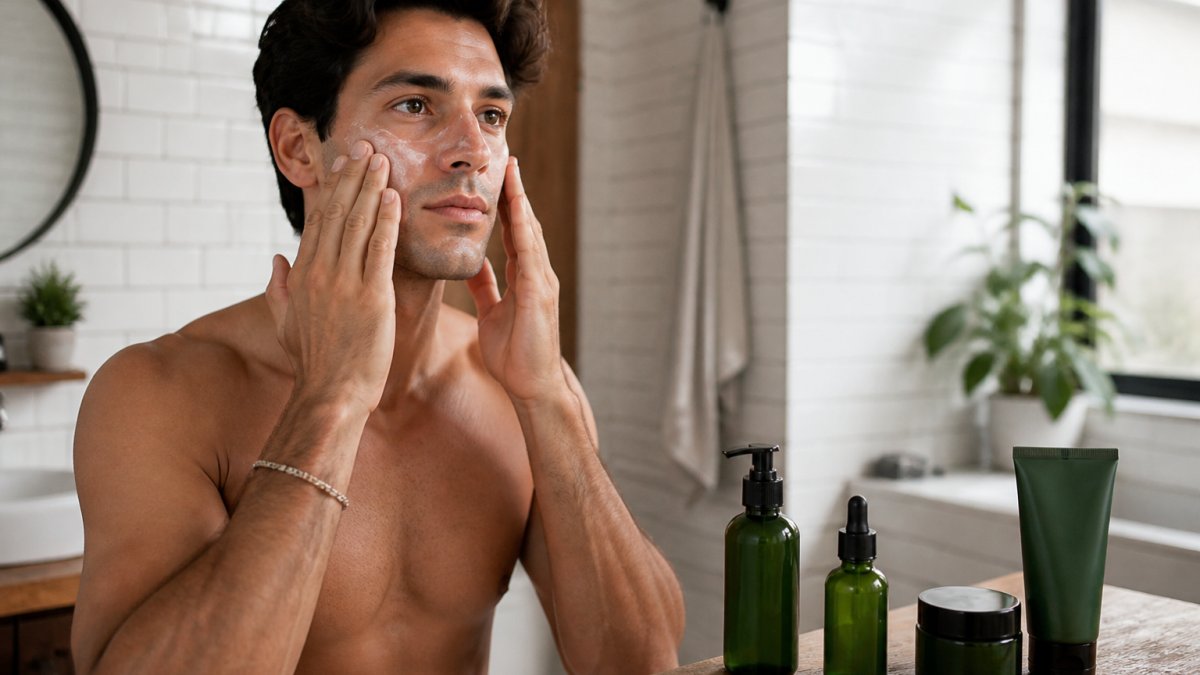
Beyond the basics, add targeted treatments: eye cream for fine lines and puffiness over 30, a spot treatment or serum for acne, a retinol alternative or peptide serum for aging. Nutra-Lift's range includes solutions for each concern.
The routine takes five minutes, and consistency matters more than complexity: daily cleansing, moisturizing, and protecting beats occasional expensive serums. Establish the habit first, then layer in products as your skin improves.
Men's Skincare for Sensitive Skin: Cruelty-Free Solutions
Why men's sensitivity is different:
- Shaving removes more than hair. A razor blade exfoliates the top layer of skin and can strip the barrier, especially with multi-blade razors and repeated passes. That leaves the jawline and neck more reactive to fragrances, alcohol-based aftershaves, and strong actives.
- Ingrown hairs are a barrier problem too. When hair curls back under the skin, the body responds with inflammation. Harsh scrubs and close shaves make this worse. Gentle chemical exfoliation (low-percentage salicylic acid, 0.5-2%) is usually better tolerated than physical scrubs.
- Beard area needs its own care. The skin under a beard is often drier and more prone to flaking, while the edges (neck, upper cheeks) are where irritation concentrates. A beard oil or balm with non-comedogenic carrier oils (jojoba, squalane) can soften hair and reduce friction without clogging pores.
What to avoid:
Skip fragrance, essential oils, drying alcohols (denatured alcohol, SD alcohol), and strong actives until the barrier is stable. These are common triggers for redness and stinging, especially right after shaving.
What to look for instead:
Focus on barrier-supporting ingredients: ceramides, hyaluronic acid, niacinamide, panthenol, and colloidal oatmeal. These repair the skin barrier and reduce inflammation without irritation. For shaving, a fragrance-free shave cream or gel and a post-shave balm with panthenol or aloe are more forgiving than alcohol-based aftershaves.
A men's sensitive-skin routine (cruelty-free):
- Pre-shave: Cleanse with a gentle, sulfate-free cleanser. Avoid scrubbing the beard area.
- Shave: Use a fragrance-free shave cream and a sharp blade. Shave with the grain first; avoid repeated passes over the same spot.
- Post-shave: Apply a fragrance-free balm with panthenol or aloe. Skip alcohol-based aftershaves.
- Moisturize: A barrier-supporting moisturizer with ceramides or niacinamide, applied to damp skin.
- Exfoliate gently 1-2 times per week: Low-percentage salicylic acid helps prevent ingrown hairs without the abrasion of a scrub.
The solution is a gentle, creamy cleanser paired with a barrier-supporting moisturizer.
Nutra-Lift's formulas are non-comedogenic and designed for all skin types, including sensitive skin. The high potency of natural ingredients means smaller amounts deliver results, reducing exposure to potential irritants.
Common Mistakes Men Make When Switching to Cruelty-Free Products
Mistake 1: Expecting identical results immediately.
Mistake 2: Buying based on price alone. Nutra-Lift's pricing reflects high potency, you need less product because more of it is active ingredient, not filler.
Mistake 3: Ignoring skin type. A cruelty-free moisturizer for dry skin will clog the pores of a man with oily skin. Match the product to your actual skin type, not just the cruelty-free label.
Mistake 4: Adding too many products at once. Use a full routine simultaneously and you won't know which product caused a reaction. Start with a cleanser and moisturizer, adding products one at a time with two weeks between additions.
Mistake 5: Not checking the parent company. A cruelty-free men's skincare brand might be owned by a corporation that tests on animals for other products. If ethical sourcing matters to you, verify the parent company's practices before buying.
Switching to cruelty-free skincare for men in 2026 is no longer a compromise on effectiveness. Brands like Nutra-Lift have proven that ethical sourcing and powerful results go together. Our over 80 natural skincare products are 3rd party FDA verified, non-comedogenic, and offer solutions for diverse skin types and concerns, including anti-aging and acne. Start with a gentle cleanser, a moisturizer matched to your skin type, and daily sunscreen, then add targeted treatments as your skin improves.
Frequently Asked Questions
What is the difference between cruelty-free and vegan skincare?
Cruelty-free means no animal testing during product development, but may contain animal-derived ingredients like honey or beeswax. Vegan skincare contains zero animal products or by-products. A product can be cruelty-free without being vegan, and vice versa. Men choosing cruelty-free skincare should check certifications to confirm whether products align with their values on both fronts.
How can men tell whether a skincare product is truly cruelty-free?
Look for third-party certifications from organizations like Leaping Bunny, PETA, or Choose Cruelty-Free. These verify that neither the brand nor its suppliers test on animals. Check the product label and company website for certification logos. Avoid brands that test on animals in any market, including countries where it's legally required. Transparent companies display their cruelty-free status prominently and explain their verification process.
Can men build a complete skincare routine using only cruelty-free products?
Yes. A basic routine includes cleanser, moisturizer, and sunscreen. Men with specific concerns can add targeted treatments like eye cream or serums. Cruelty-free options now cover every category and skin type, from oily to sensitive. The key is starting with essentials and adding products gradually based on your skin's response, rather than overhauling everything at once.
Which cruelty-free skincare products work best for men with sensitive skin?
Men with sensitive skin benefit from cruelty-free products formulated without harsh chemicals, synthetic fragrances, or common irritants. Look for non-comedogenic formulas that won't clog pores. Natural and organic ingredients reduce the risk of irritation, though even natural products can trigger reactions. Patch test new products on a small area first. Brands offering solutions tailored to sensitive skin concerns provide the safest starting point.