 how-to
How to Switch to Clean Beauty: A Practical Guide
Table of Contents
- What Clean Beauty Means and Why It Matters
- How to Read Skincare Ingredient Labels and Spot Harmful Chemicals
- Building Your Clean Skincare Routine: A Step-by-Step Approach
- How to Transition to Clean Skincare Without Overwhelming Your Skin
- Clean Beauty Product Swaps: Replace One Product at a Time
- Ingredient Safety: What to Avoid and What to Look For
- Verify Claims and Avoid Greenwashing
- Common Mistakes to Avoid When Switching to Clean Beauty
- Frequently Asked Questions
Last Updated: October 18, 2026
What Clean Beauty Means and Why It Matters
To switch to clean beauty means choosing skincare and cosmetics made with ingredients you can recognize and trust, avoiding potentially harmful chemicals and prioritizing long-term skin health.
The shift toward clean beauty reflects a simple truth: your skin absorbs what you apply.
Clean beauty emphasizes ingredient transparency and safety. Learn to read labels and understand what ingredients do rather than trusting marketing claims.
How to Read Skincare Ingredient Labels and Spot Harmful Chemicals
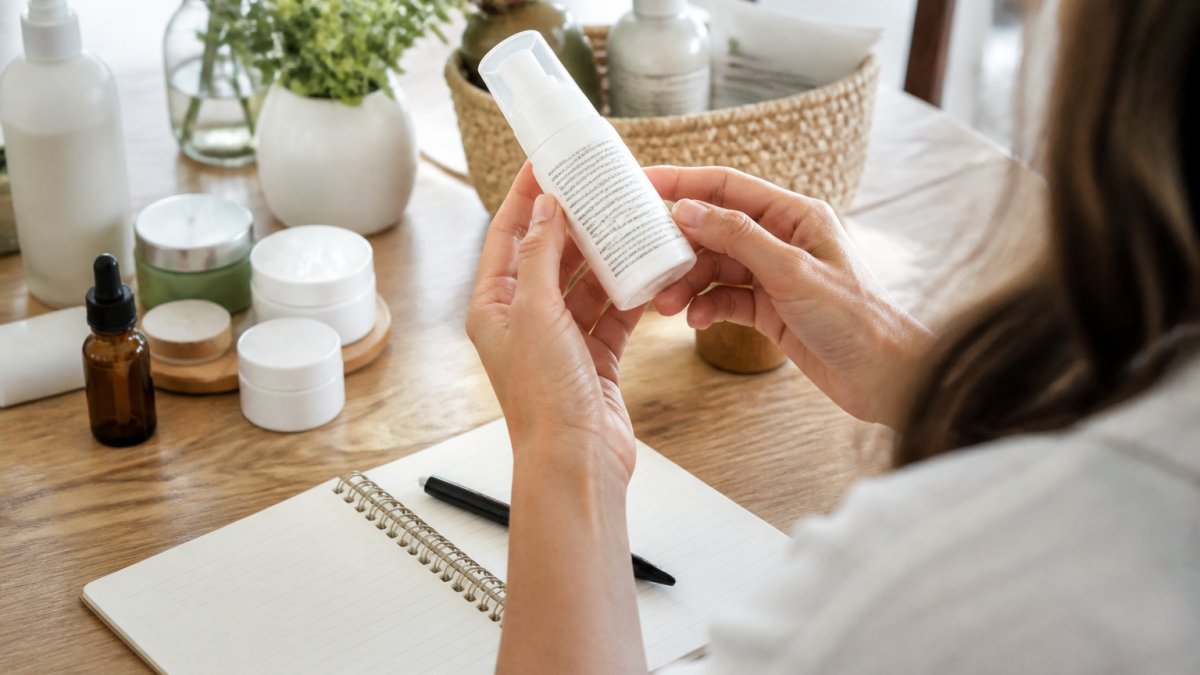
The ingredient list is your most valuable tool.
Look for these commonly questioned ingredients:
- Parabens, preservatives that extend shelf life but concern many consumers
- Sulfates, cleansing agents that can strip natural oils
- Phthalates, chemicals often hidden under "fragrance" on labels
Many brands use these ingredients safely in small amounts. The real question is whether an ingredient serves your skin's needs and aligns with your values.
Check specific ingredient names against reliable databases, "sodium lauryl sulfate," not just "sulfates." Brands that hide ingredients behind vague terms like "fragrance" are worth questioning.
Building Your Clean Skincare Routine: A Step-by-Step Approach
When you switch to clean beauty, you don't need to replace everything at once. A gradual transition prevents shock to your skin and lets you identify which products work for you.
Step 1: Assess Your Current Routine and Skin Type
Write down every product you use, cleansers, moisturizers, treatments, sunscreen, makeup, and note how your skin responds to each.
Identify your skin type honestly:
- Oily skin, shiny appearance, large pores, prone to breakouts
- Dry skin, tight feeling, flakiness, sensitivity
- Combination skin, oily in T-zone, dry elsewhere
Your skin type determines which clean products work best, a heavy cream for dry skin may clog oily skin.
Step 2: Identify Your Daily-Use Priority Products
Focus on items you use twice daily or more, they have the greatest impact on your skin.
Your priority list likely includes:
- Cleanser, washes away dirt and makeup
- Moisturizer, hydrates and protects skin barrier
- Sunscreen, prevents UV damage
Replace these three with clean versions before worrying about serums, masks, or specialty treatments, daily-use products have the most contact time with your skin.
Step 3: Patch Test Before Full Use
Always patch test first: apply to your inner arm or behind your ear, wait 24 hours, and monitor for redness, itching, or burning.
If no reaction occurs, use it 3-7 days before adding another new product, so you can identify the culprit if a reaction develops.
How to Transition to Clean Skincare Without Overwhelming Your Skin
Most guides say "switch gradually", true but not actionable. What helps is a phased plan with a realistic timeline, a spending limit, and a clear order of operations, including what to do with half-used products already on your shelf.
Phase 0: Audit before you buy (Week 1)
Before spending anything, inventory what you own.
- List every product for face, body, hair, and mouth, cleanser, toner, serum, moisturizer, sunscreen, makeup, shampoo, conditioner, body wash, lotion, deodorant, toothpaste, fragrance.
- Note frequency (daily, weekly, occasionally) and how much is left.
- Flag your empties, natural replacement points, so make the next purchase a clean one.
Phase 1: Replace your daily leave-on and rinse-off core (Weeks 2-6)
Prioritize products with the most skin contact and highest frequency:
- Cleanser, used twice daily, rinse-off.
- Moisturizer, used twice daily, leave-on.
- Sunscreen, used daily, leave-on, and the single most important anti-aging product you own.
Replace one product at a time, roughly every two weeks, so you can attribute any reaction to a specific product. With sensitive skin, stretch to three to four weeks per product.
Budget guidance: You don't need the most expensive clean option. Set a per-product ceiling before you shop, clean beauty is a category, not a price point, and many drugstore and mid-range brands publish full ingredient lists and avoid common irritants.
Phase 2: Use up what you have (Weeks 2-12, in parallel)
You don't need to throw away products you own. Use up leave-on products you're comfortable finishing while replacing your core routine, then swap them at their natural empty point. Two exceptions:
- Anything that irritates your skin, stop using it now rather than waiting.
- Anything past its expiration or that smells or looks off, discard it. Preservatives degrade over time, and expired products can grow microbes.
This saves money and avoids waste, important if sustainability is part of why you're switching.
Phase 3: Extend to the rest of your routine (Weeks 6-16)
Once your core routine is stable, work outward in this order:
- Targeted treatments (serums, eye creams, exfoliants), replace as they empty.
- Makeup, start with base products (foundation, concealer, powder), then lip and eye. Check expiration dates; replace mascara every few months regardless.
- Hair care, shampoo, conditioner, styling products. Treat a sensitive scalp like sensitive facial skin.
A simple product-by-product checklist
Use this as a running list. Check off each item as you replace it at its natural empty point.
- Cleanser
- Moisturizer (AM and PM if separate)
- Sunscreen
What to expect during the transition
- A short adjustment period is normal. Minor breakouts or dryness in the first one to two weeks can occur; if irritation persists beyond two weeks or is severe, stop the product.
- Don't stack new products. Introduce one at a time so you can identify any reaction's cause.
- Track your progress. A note or photo every two weeks shows whether the switch is improving your skin and which products worked.
Clean Beauty Product Swaps: Replace One Product at a Time
Strategic product swaps let you transition gradually without overwhelming your skin or budget.
Cleanser and Moisturizer Swaps
Your cleanser is the foundation of any routine. A clean cleanser removes makeup and impurities without stripping natural oils.
Look for cleansers with these qualities:
- Free of sulfates
- Contains hydrating ingredients like glycerin or hyaluronic acid
- Removes makeup effectively in one step
Your moisturizer should match your skin type. Oily skin needs lightweight, non-comedogenic formulas.
Nutra-Lift offers cleansers and moisturizers formulated for different skin types and concerns. Our non-comedogenic formulas work for acne-prone skin without causing breakouts.
Sunscreen and Targeted Treatment Swaps
Sunscreen is non-negotiable for clean beauty. UV damage causes wrinkles, age spots, and skin cancer (the WHO). A clean sunscreen protects without questionable ingredients.
Choose a sunscreen with:
- Mineral or chemical filters that feel comfortable on your skin
- No oxybenzone or octinoxate (ingredients some consumers prefer to avoid)
- Broad-spectrum protection (UVA and UVB)
Targeted treatments like serums or eye creams come next. These address specific concerns like fine lines, dark spots, or sensitivity. Replace them only after your core routine is solid.
Ingredient Safety: What to Avoid and What to Look For
Most clean-beauty guides hand you a list of "bad" ingredients and a list of "good" ones. That framing is easy to remember but misleading. Ingredient safety is not a property of a name on a label, it depends on the dose, how the product is used, how long it stays on your skin, and who is using it.
The four factors that actually determine risk
When you evaluate any ingredient, ask these four questions in order:
- Dose and concentration. Is the ingredient near the top of the list (high concentration) or near the bottom (often under 1%)? Ingredient lists are ordered by concentration until you reach the 1% mark, after which order is at the brand's discretion. A preservative at 0.5% is doing a different job than an active at 10%.
- Exposure route and duration. Rinse-off products (cleansers, shampoos) have brief skin contact. Leave-on products (moisturizers, serums, sunscreen) stay for hours. The same ingredient can be low-risk in a body wash and worth scrutinizing in a leave-on product.
- Frequency and surface area. A daily full-face product matters more than a weekly spot treatment. A body lotion applied head-to-toe covers far more skin than an eye cream.
- Individual susceptibility. Fragrance sensitivity, eczema, rosacea, and known allergies change the calculus entirely. An ingredient that is fine for most people can be a trigger for you.
Ingredients worth scrutinizing, and why
This is not a ban list. It is a list of ingredients where the reason for concern is well documented, so you can decide based on your own use case:
- Parabens (e.g., methylparaben, propylparaben). Effective preservatives with a long safety record at typical cosmetic concentrations. Some consumers prefer to avoid them because of concerns about endocrine activity; regulatory bodies in the US and EU currently permit them at restricted levels. If you choose to avoid them, know you are making a preference-based call, not a clear-cut safety one.
- Sulfates (e.g., sodium lauryl sulfate). Strong surfactants that cleanse effectively but can strip oils and irritate sensitive or dry skin, especially in leave-on or frequent-use products. In a rinse-off cleanser, many people tolerate them fine.
- Phthalates. Often not listed by name because they can hide under "fragrance." The concern is cumulative exposure and endocrine activity. Choosing fragrance-free products is the most reliable way to reduce exposure.
Ingredients worth seeking out, with mechanisms
"Clean" does not mean "inert." The most useful ingredients have a clear job:
- Hyaluronic acid and glycerin. Humectants that draw water into the upper skin layers. Glycerin is one of the best-studied, most reliable humectants in cosmetics.
- Niacinamide (vitamin B3). Supports the skin barrier, can help with redness and uneven tone. Well tolerated by most skin types at typical concentrations.
- Peptides. Short chains of amino acids that signal skin to support collagen production. Evidence is promising but formulation-dependent.
How to check an ingredient without a chemistry degree
- Read the full INCI list, not just the front-of-pack claims. The INCI (International Nomenclature of Cosmetic Ingredients) name is the standardized name regulators and formulators use.
- Cross-check against a public database such as the EU CosIng database or a reputable cosmetic-ingredient reference. These tell you what an ingredient is used for and any regulatory restrictions.
- Look for concentration context. If a brand markets a "hero" ingredient but it appears after the preservative near the bottom of the list, the amount is likely minimal.
The goal is not to eliminate every ingredient someone has questioned. It is to understand why an ingredient is in a product, how much is there, and whether it fits your skin and your values. That is a more durable skill than any ban list.
Verify Claims and Avoid Greenwashing
Brands use misleading language to appear cleaner than they are. Common greenwashing tactics include:
- "Natural" claims, the FDA doesn't regulate this term, so any product can claim it
- "Chemical-free", everything is a chemical; this claim is meaningless
- Vague certifications, some labels sound official but lack real standards
Real transparency looks different. Trustworthy brands:
- List all ingredients clearly
- Explain why each ingredient is included
- Disclose sourcing and manufacturing practices
Nutra-Lift products are third-party verified by the FDA. This means an independent organization has tested our formulas and confirmed they meet safety and quality standards.
Ask questions before buying. Email the brand's customer service. Request ingredient sourcing information. Legitimate brands answer these questions. If a company avoids transparency, that's a red flag.
Common Mistakes to Avoid When Switching to Clean Beauty
Understanding what doesn't work helps you succeed faster.
Mistake 1: Expecting instant results. Clean beauty takes time.
Mistake 5: Assuming all natural products are safe. Some natural ingredients irritate sensitive skin.
Mistake 7: Not patch testing. Jumping straight to full-face application risks irritation and breakouts.
Switching to clean beauty is an investment in your skin's long-term health.
At Nutra-Lift, we've built our entire line around this philosophy.
Frequently Asked Questions
What is the difference between clean beauty and natural or organic beauty?
Clean beauty prioritizes ingredient transparency and safety, focusing on avoiding potentially harmful chemicals regardless of whether ingredients are natural or synthetic. Natural beauty emphasizes plant-based ingredients, while organic beauty requires certification standards. A product can be clean without being natural, and natural products aren't automatically clean if they contain undisclosed or potentially irritating ingredients. Clean beauty is about knowing exactly what's in your products and why.
Do I need to replace all my beauty products at once when switching to clean beauty?
No. Replacing everything at once can shock your skin and make it difficult to identify which products work for you. Instead, transition gradually by replacing one product every 1-2 weeks, starting with daily-use items like cleanser and moisturizer. This phased approach lets your skin adjust, helps you spot sensitivities, and spreads the cost over time. Most people see better results with a gradual transition than an abrupt overhaul.
How do I know if a clean beauty product claim is legitimate and not greenwashing?
Look for third-party verification, transparent ingredient lists with recognizable names, and specific claims backed by evidence rather than vague marketing language. Check if the brand discloses what they exclude and why. Greenwashing uses terms like 'natural' or 'clean' without specifics. Legitimate brands list every ingredient, explain their sourcing, and often provide certifications from recognized bodies. Be skeptical of 'clean' claims without supporting details or certifications.
How long should I wait before adding a new clean beauty product to my routine?
Wait 1-2 weeks between introducing new products so you can identify any sensitivities or irritation. If you introduce multiple products simultaneously, you won't know which one caused a reaction. Start with a patch test on a small area of skin for 3-5 days before applying the product to your full face. This approach is especially important for sensitive skin, as it helps you build a routine confidently while minimizing the risk of allergic reactions or irritation.